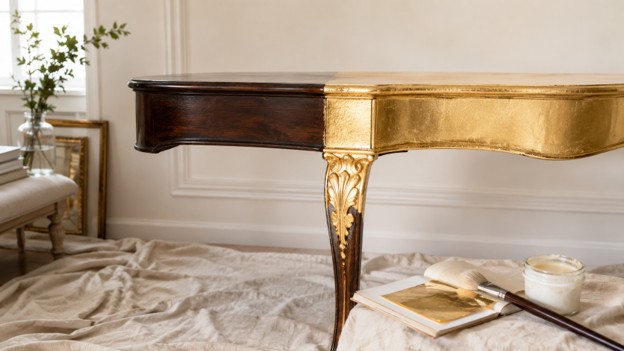
10 common imitation gold leaf mistakes and how to fix them
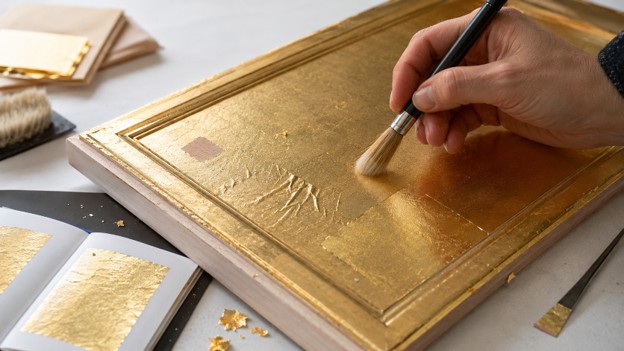
Many small gilding problems can be repaired locally when the substrate is stable.
Gilding problems often come from the substrate, application timing or incompatible products. If leaf does not stick, wrinkles, tears or darkens, identify the cause before adding another layer. These common issues and repairs will help you plan a better finish.
1. A dusty, greasy or unstable substrate
Dust, grease, wax and polish prevent adhesion. Loose paint will lift with the leaf. Clean using a method suited to the material, stabilise or remove loose layers and test adhesion in an inconspicuous area. Wait until the substrate is fully dry.
2. An unsealed porous surface
Raw wood, MDF, plaster and filler may absorb adhesive unevenly, leaving patchy tack. Apply a suitable primer in thin coats, paying particular attention to MDF edges, cut wood and repaired areas.
3. The wrong adhesive or too much adhesive
Ordinary glue may remain cloudy or leave thick marks. Too much gilding size retains brush texture and may swallow the leaf. Use a suitable gilding adhesive in a thin, even coat. If an uneven coat is already dry, level and prepare the surface again instead of hiding it with more leaf.
4. Laying leaf while adhesive is too wet
Wet adhesive can make leaf wrinkle, sink or lose shine. Follow the product’s timing and tack guidance. Allow wet areas to reach the correct tack before applying leaf.
5. Adhesive drying beyond its tack window
Working on too large an area can leave parts inactive before you reach them. Divide the project into smaller sections. Apply a thin compatible adhesive coat only where needed, wait for correct tack and lay fresh leaf.
6. No overlap between sheets
Sheets laid edge to edge can leave visible gaps after brushing, especially on relief. Overlap slightly, remove loose excess gently and repair exposed joins with precise adhesive and a narrow leaf fragment.
7. Handling leaf with greasy fingers
Skin oils and moisture can mark the metal and accelerate colour changes. Use clean tools and cotton gloves where appropriate. Avoid squeezing the leaf. Do not aggressively polish fingerprints; assess whether the affected section should be replaced.
8. Brushing too hard or too early
Heavy brushing can tear the leaf or pull it from recesses. Even soft brushing may move it before adhesion stabilises. Use a very soft, dry brush with light strokes and remove only loose excess in several gentle passes.
9. Applying incompatible protection or sealing too soon
Coating wet adhesive can cause clouding, stains or a soft layer. Some finishes react with imitation leaf or alter its tone. Allow full drying, test adhesive, leaf and coating together, and apply a thin first protective coat without repeatedly working the same area.
10. Leaving imitation leaf unprotected or using it in unsuitable conditions
Copper-containing leaf can darken with air, moisture and handling. An ordinary indoor finish may not suit bathrooms, steam, outdoors or frequent cleaning. Specify protection for the actual conditions and seek professional help for demanding outdoor and restoration projects. Coating badly tarnished leaf will not restore an even colour; damaged layers may need replacing.
How to repair a small gap or scratch
1. Check that the surrounding layer is stable
If edges continue to lift, a patch will not solve the cause. Address moisture, poor adhesion or an unstable substrate first.
2. Clean only the damaged area
Remove loose material with a soft brush. Avoid sanding across sound gilding and widening the damage.
3. Apply adhesive precisely
Use a fine brush to cover the gap and a very small border. Wait for the correct tack.
4. Lay a fragment and smooth gently
Saved offcuts are useful for repairs. Overlap the existing gilding slightly to avoid a visible line.
5. Match the protective finish
After full drying, protect the repaired area with a compatible product. A local coating may show on glossy surfaces, so a very thin coat across the whole logical section may be needed.
Three tests before the full project
- Adhesion: check primer and adhesive on the existing substrate.
- Colour: assess the leaf over the base colour under daylight and artificial light.
- Protection: check whether the finish changes colour, shine or texture.
Prevent problems before they start
Make a sample with the same substrate, adhesive, leaf and protective coating. Browse the range in our. For a large, outdoor or valuable surface, send project details through our https://zlatnilistici.com/en/contact/ before ordering.